
The Himalayan Clutch: Mastering Steep Inclines and Declines on Your Motorbike

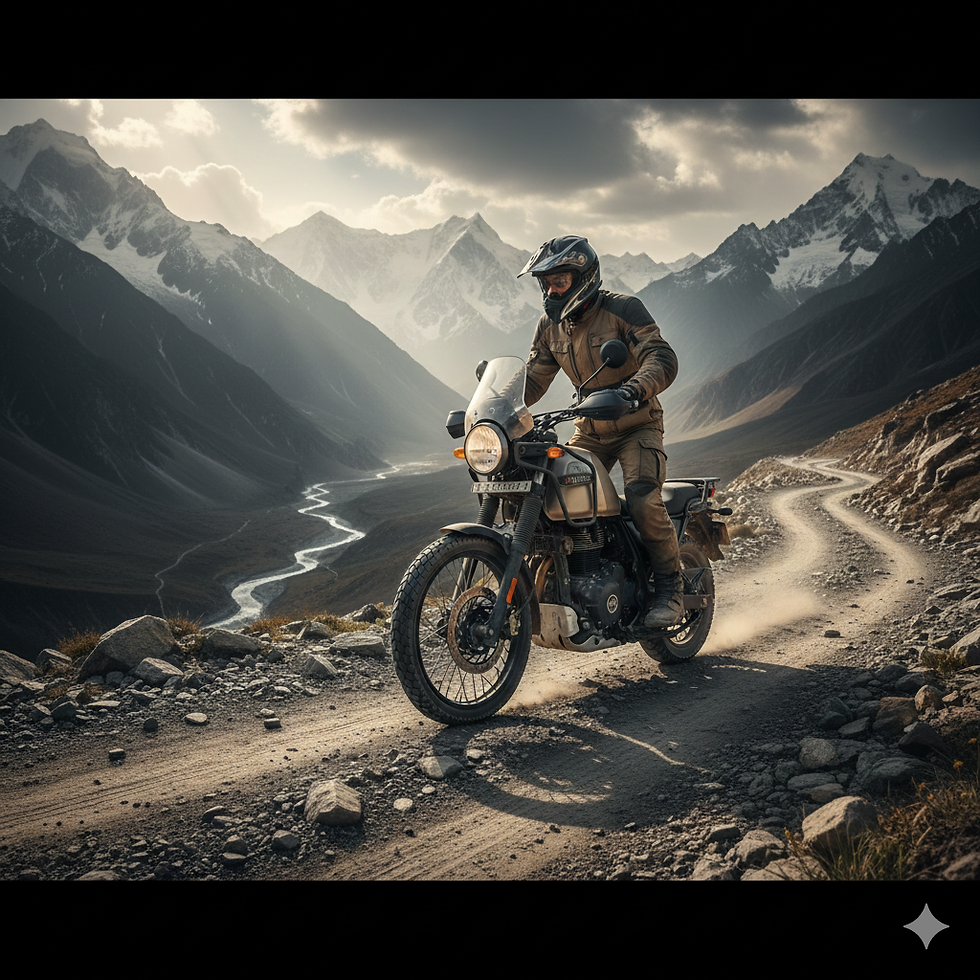
Riding through the Indian Himalayas is the ultimate test of rider and machine. The vast scale, unpredictable weather, and breathtaking views are matched only by the sheer difficulty of the terrain. The steepest inclines and long, winding declines on broken surfaces—like those found on the approaches to the Rohtang Pass or Zojila—demand specific skills far beyond highway cruising.
Mastering your clutch, brakes, and body positioning on these extreme slopes is not just about confidence; it's about safety and engine longevity. Here is the essential guide to tackling the Himalayas like a seasoned pro.
1. ⬆️ Mastering the Uphill Climb (The Incline)
Steep inclines demand precise power delivery and commitment.
Gear Selection is Key: Before the climb begins, shift into a low gear (First or Second). Once you commit, maintain power and avoid shifting mid-climb. Shifting can cause a dangerous stall or loss of momentum.
The Half-Clutch Rule: Use the half-clutch (or clutch feathering) only to start moving or to manage speed over short, rough obstacles. Once moving, release the clutch fully to minimize wear and prevent overheating.
Stand Up: On rough, steep surfaces, stand on the footpegs. This lowers your center of gravity, uses your legs as suspension, and allows the bike to move freely beneath you for better traction.
Stopping on an Incline: If you must stop, apply the rear brake first, then the front. To restart, hold the rear brake, feather the clutch until you feel the bike 'bite' (the friction point), and then smoothly release the rear brake while feeding the throttle.
2. ⬇️ Conquering the Downhill Slide (The Decline)
Long declines generate brake heat and can lead to dangerous brake fade if not managed correctly.
Engine Braking is Mandatory: Never coast in neutral or hold the clutch in. Select a low gear (Second or First) that allows the engine compression to naturally control your speed. This technique is called engine braking.
Brake Usage: Use both the front and rear brakes gently and simultaneously. Avoid locking up either wheel. Since the weight shifts forward downhill, the front brake is highly effective, but use it judiciously.
Pumping Brakes: On extremely long, steep sections, briefly pump the brakes (apply, release, apply) rather than dragging them continuously. This allows air to pass over the pads and rotors to cool them, preventing brake fade.
Body Positioning: Lean slightly backward over the seat. This shifts some of your weight rearward, helping to maintain traction on the rear wheel and preventing the front end from diving too aggressively.
3. 🚧 Traction Tips for Unpredictable Surfaces
The worst Himalayan climbs are always steep and covered in gravel, slush, or melting ice.
The Line of Sight: Always look 15-20 meters ahead, not just at your front wheel. Look for the best line—usually the least rocky or dry path—and commit to it.
Maintain Momentum: Slow down before the rough section, but maintain enough momentum to carry you through. Sudden braking or deceleration in slush or gravel leads to a loss of balance.
Relax Your Grip: Maintain a loose grip on the handlebars. Let the bike 'walk' beneath you. If you fight the handlebars, you will amplify the wobbles.
🚀 Ride Safer and Plan Better with Riding Verse (Coming Soon)!
These technical skills are best learned through shared experience. Before you face that 45-degree climb, wouldn't it be great to chat with someone who did it last week?
Riding Verse is coming soon to connect you with the expertise you need:
Verified Route Conditions: Access real-time updates from riders just ahead of you about which passes have fresh black ice, deep slush pits, or newly constructed road surfaces.
Himalayan Ride Groups: Find and connect with experienced Himalayan riders to ask technical questions about clutch plate wear, altitude sickness, or specific gear ratios for your bike model.
Training Partner Search: Use the platform to find local riders who can join you for practice rides on steep city ramps or off-road patches near Dehradun before your big trip.
Elevate your skills. Conquer the mountains with confidence and knowledge.

Riding Verse


Comments